 webSylhetYour Virtual Sylhet webSylhetYour Virtual Sylhet
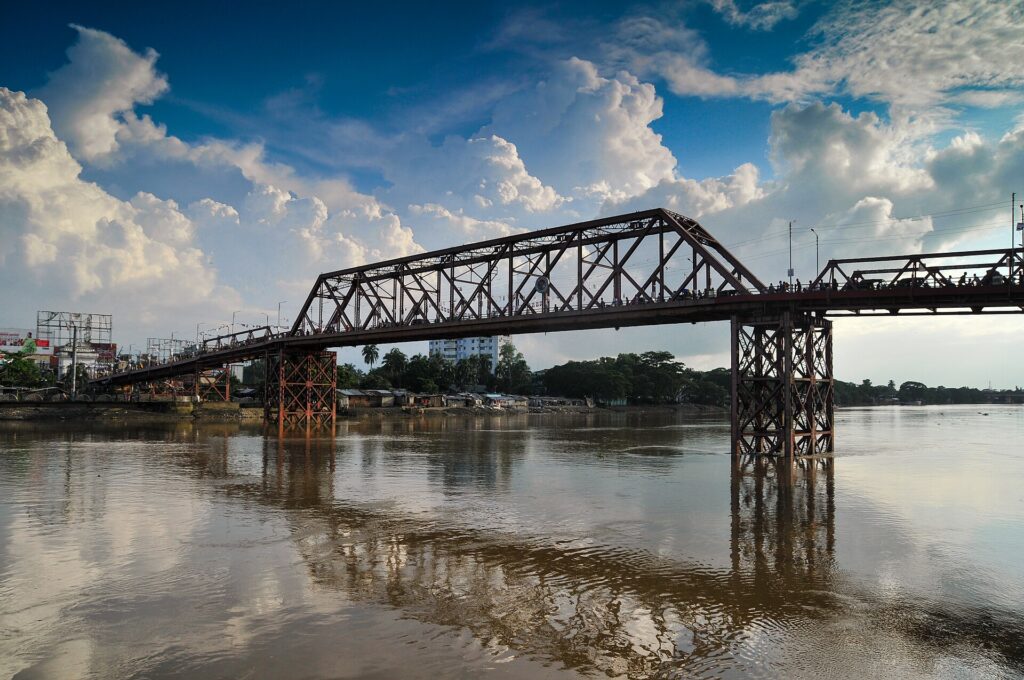
Keane Bridge, often searched as Kean Bridge, is a historic steel crossing over the Surma River in central Sylhet. Its curved ironwork, riverside views and position beside the old city make it a useful stop for visitors who want to explore Sylhet’s heritage as well as its tea gardens.
The bridge crosses the Surma between the city-side riverfront and South Surma. On the northern approach, the Court Point and Ali Amjad’s Clock area provides a recognisable starting point for finding the landmark. Use “Keane Bridge, Sylhet” when looking up directions rather than a general search for the Surma River.
If you are arriving by intercity transport, check your arrival location first. Our Sylhet bus stand guide explains Kadamtali and other boarding areas, while the Sylhet Railway Station guide helps with rail travel. Arrange the onward journey to the riverfront separately.
Government visitor information records construction beginning in 1933 and the bridge opening in 1936. It was named after Michael Keane, an Assam administrator of the British period. The crossing became an important connection between Sylhet town and the southern bank of the Surma.
The same government account describes the bridge’s iron construction and an approximate length of 1,150 feet. Its distinctive form remains one of the city’s recognisable riverfront features. The structure also suffered damage during the Liberation War in 1971 and was subsequently repaired.
For visitors, the interest is in seeing the crossing as part of Sylhet’s changing urban landscape. The bridge, river and nearby historic clock help explain why this waterfront matters to the city, rather than simply offering another photograph stop.
Combine your visit with Ali Amjad’s Clock, a landmark beside the Surma near the bridge. A wider riverfront view can include both structures. Keep clear of traffic and leave space for pedestrians when stopping for pictures.
View the bridge from a permitted public area on the riverfront. Look for a comfortable position with a clear walking route back, especially if travelling with children or someone with limited mobility. Do not climb railings, enter work areas or move down unstable banks for a better angle.
A simple plan is to arrive near the northern approach, see the clock, pause at an accessible riverfront viewpoint and finish with a refreshment stop elsewhere in the city. Allow time for traffic and a rest rather than scheduling several distant attractions around a brief visit.
Vehicle restrictions and restoration work have affected the bridge’s use. Check current signs and local authority instructions on the day. Plan transport to an approach rather than assuming you can drive across, and only use pedestrian access where it is clearly permitted.
If the crossing is closed, enjoy the view from an accessible part of the riverfront. Do not pass a barrier because another visitor has done so.
Tell your CNG or rickshaw driver the full landmark name and the side of the river where you want to be dropped off. Agree the fare, waiting time and return arrangements before travelling. Showing a map pin can help distinguish the landmark from another river crossing.
Daylight makes it easier to assess walking surfaces and locate your return pickup. For photographs, consider the light and weather, but keep your visit flexible around rain and access conditions. This is an active urban area, so keep belongings secure and avoid obstructing roads or pavements.
There is no current admission tariff verified in this guide. Check any separately offered boat ride or guided activity directly before paying. Agree what is included and do not assume that an activity beside the bridge is operated by the bridge authorities.
Yes. “Kean Bridge” is a common search spelling for Keane Bridge over the Surma River in Sylhet.
Government visitor information records its opening in 1936, following construction that began in 1933.
Do not assume a vehicle crossing is permitted. Follow current restrictions and arrange a drop-off near the relevant approach.
You can request a city sightseeing tour through WebSylhet’s WS Travel Planner. Tell us your dates, group size and access needs. Availability, route and cost are confirmed before a booking is agreed; the enquiry requires no upfront payment.
Ali Amjad’s Clock and permitted parts of the Surma riverfront fit naturally into a short outing. Confirm access to other buildings and attractions separately.
Use our Sylhet tourism guide for more places to visit, or request help planning a city tour.
History reviewed 28 October 2026 against government visitor information. Access background includes reporting on vehicle restrictions. Follow current on-site instructions for crossing and riverfront access.