
Top Attractions to Visit in Moulvibazar
Moulvibazar is one of Bangladesh’s most rewarding green escapes, known for tea gardens, forest trails, wetlands, waterfalls and calm rural scenery. For travellers planning a nature-led trip through Moulvibazar Bangladesh, the strongest route is to combine Sreemangal, Kamalganj, Madhabkunda and the surrounding haor areas into a slow, scenic itinerary. This guide highlights the places worth your time and how to enjoy them with a little more purpose.
What makes Moulvibazar worth visiting?
Moulvibazar is worth visiting because it offers a rare mix of tea country, rainforest, lakes, wetlands and cultural villages within one district. The area is strongly associated with tea; official tourism material describes Moulvibazar district as home to many tea gardens, while Sreemangal is widely promoted as Bangladesh’s tea capital. (parjatan.gov.bd)
That variety is the main appeal. One morning can be spent walking beside neat rows of tea bushes, while the afternoon might take you into forest shade, beside a quiet lake, or towards a wetland filled with birds. It is a destination that rewards unhurried travel rather than quick photo stops.
Lawachara National Park is the classic forest experience
Lawachara National Park is one of the best-known attractions in Moulvibazar, especially for travellers who want forest, wildlife and walking trails. The official district portal places it in Kamalganj Upazila and describes it as a mixed evergreen rainforest of about 1,250 hectares, rich in biodiversity and known for the endangered hoolock gibbon. (moulvibazar.gov.bd)
The park works well as a half-day visit from Sreemangal. Go early if you can: the light is softer, the air feels cooler, and the forest is usually more alive with birdsong. A local guide can help you understand the trails, identify plants and explain the nearby Khasi communities without turning the visit into a rushed checklist.
For a better visit, bring comfortable shoes, drinking water and insect repellent. Keep noise low, avoid feeding wildlife and stay on marked paths. Lawachara’s beauty is not only in spotting animals; it is in the sound of leaves, the height of the trees and the sudden sense of being far from the road.
Sreemangal tea gardens define the landscape
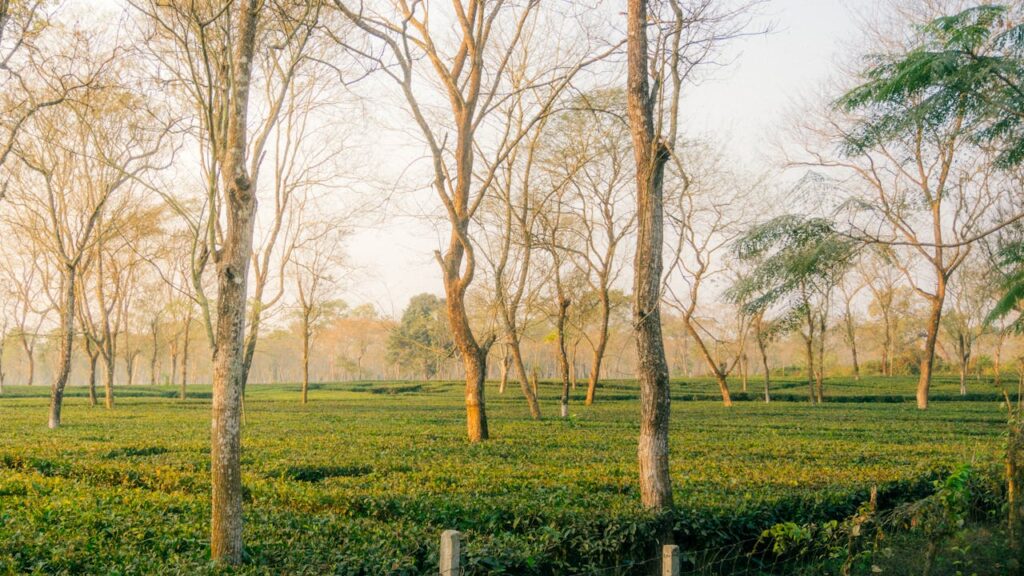
The tea gardens around Sreemangal are central to the identity of Moulvibazar Bangladesh. Tourism sources describe Sreemangal as the “land of two leaves and a bud”, and the district’s green slopes make tea estates one of the most recognisable sights in the region. (beautifulbangladesh.gov.bd)
The pleasure here is simple: follow the curving roads, stop at viewpoints where permitted, and take time to notice the texture of the landscape. Tea bushes run over small hills like patterned fabric, broken by tall shade trees, village paths and workers moving steadily through the fields.
Visitors should remember that many tea estates are working landscapes, not public parks. Ask before entering private areas, be respectful when taking photographs, and avoid blocking estate roads. If you want a fuller experience, combine a tea garden drive with the Tea Museum in Sreemangal, which the district portal links with local tea heritage. (moulvibazar.gov.bd)
Madhabpur Lake brings tea, water and wide views together
Madhabpur Lake is a peaceful stop in Kamalganj, set among tea garden scenery. Bangladesh Parjatan’s information describes it as an artificial lake within Madhabpur tea garden, with water lilies and lotus flowers, surrounded by high tea-covered hills. (parjatan.gov.bd)
This is a good place to slow the pace of your trip. The lake is especially appealing for gentle walking, photography and quiet views rather than strenuous activity. In the cooler months, the surrounding area can feel particularly pleasant, with softer light and a calmer mood around the water.
If you are travelling with family, Madhabpur Lake is an easy addition because it offers scenery without requiring a difficult trek. Pair it with nearby tea garden stops, but leave enough time simply to sit and take in the water, hills and sky.
Madhabkunda Waterfall is made for a day trip
Madhabkunda Waterfall is often included in Moulvibazar travel plans because it adds a dramatic natural feature to the district’s gentler tea and wetland scenery. The district’s tourism listings include Madhabkunda among notable attractions, alongside Lawachara, Hakaluki Haor, Madhabpur Lake and Ham Ham Waterfall. (zpmoulvibazar.gov.bd)
A visit works best when you treat it as a proper day trip rather than a quick detour. Wear footwear that can handle uneven or damp ground, keep a little flexibility in your timing, and avoid risky climbing around wet rocks. Waterfalls are most enjoyable when approached carefully, with time to enjoy the sound, spray and surrounding greenery.
Baikka Beel and Hail Haor are for birdlife and quiet water
Baikka Beel is a strong choice for travellers who enjoy wetlands, birds and open skies. Bangladesh’s tourism portal describes Baikka Beel as a sanctuary for birds and fish in the Sreemangal and Moulvibazar area, while Bangladesh Parjatan notes Hail Haor as a wetland area associated with migratory birds in winter. (beautifulbangladesh.gov.bd)
This is a different side of Moulvibazar district. Instead of hills and forest, you get water, reeds, fishing life and long views that change with the season. Early morning and late afternoon are usually the most atmospheric times, especially for photography.
Bring binoculars if you have them, and keep expectations realistic. Birdwatching is not a guaranteed performance; it is an invitation to be patient. Even without close sightings, the wetland setting gives a memorable contrast to Sreemangal’s tea country.
Ham Ham Waterfall suits adventurous travellers
Ham Ham Waterfall is another popular natural attraction listed in district tourism material, but it is better suited to visitors who are comfortable with a more active outing. (zpmoulvibazar.gov.bd) Unlike easily accessible viewpoints, waterfall trips can involve rough paths, mud, streams and changing local conditions.
If you choose to go, plan with care. Check current access locally, go with someone who knows the route, start early, and avoid attempting it in unsafe weather. The reward is a more adventurous experience of Moulvibazar’s forested landscape, but the practical preparation matters as much as the destination.
Simple ways to plan a better Moulvibazar trip
A good itinerary should balance movement with breathing room. Moulvibazar is at its best when you do not try to squeeze every attraction into one day.
Useful planning tips include:
- Base yourself in Sreemangal if you want easy access to tea gardens, Lawachara, Baikka Beel and local food stops.
- Group nearby places together, such as Lawachara with tea garden viewpoints, or Madhabpur Lake with Kamalganj sights.
- Start nature visits early to avoid stronger heat and enjoy quieter trails or roads.
- Carry cash and essentials, especially for rural routes where facilities may be limited.
- Dress modestly and practically, with light clothing, comfortable shoes and sun or rain protection.
- Respect working communities, particularly in tea estates, villages and indigenous community areas.
A balanced itinerary for first-time visitors
For a short trip, spend your first day around Sreemangal: visit tea gardens, stop at the Tea Museum if it fits your interests, and enjoy a relaxed evening. On the second day, explore Lawachara National Park in the morning and Baikka Beel later in the day. If you have a third day, add Madhabpur Lake or Madhabkunda Waterfall, depending on whether you prefer calm scenery or a more energetic excursion.
Moulvibazar does not need to be rushed to be memorable. Its strongest attractions are rooted in landscape, season and atmosphere: green tea slopes, forest shade, reflective water and rural quiet. Travel gently, leave space in the plan, and Moulvibazar district will feel less like a checklist and more like one of Bangladesh’s most refreshing natural journeys.
Leave a Reply