
People · work · landscape
Beyond the green rows of tea
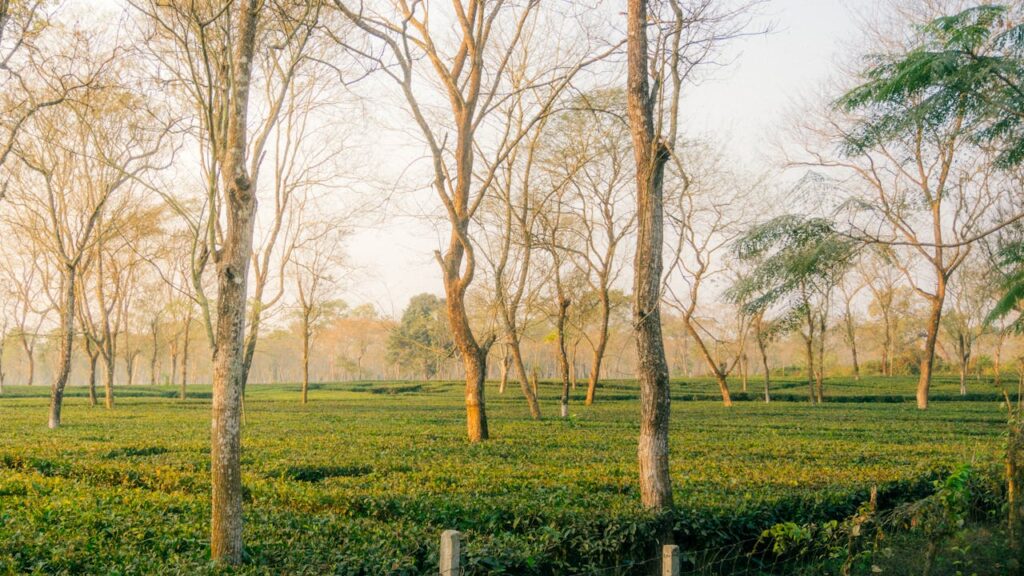
Sylhet’s tea gardens are working landscapes. The neat rows of bushes are only part of the story: growing and making tea also depends on skilled field work, factory work and the communities connected to the estates.
This guide looks at the journey from leaf to cup, the people behind it and how to visit with care. When we refer to greater Sylhet, we include the wider tea-growing region, not just Sylhet city.
A longer history
Tea and the Sylhet region
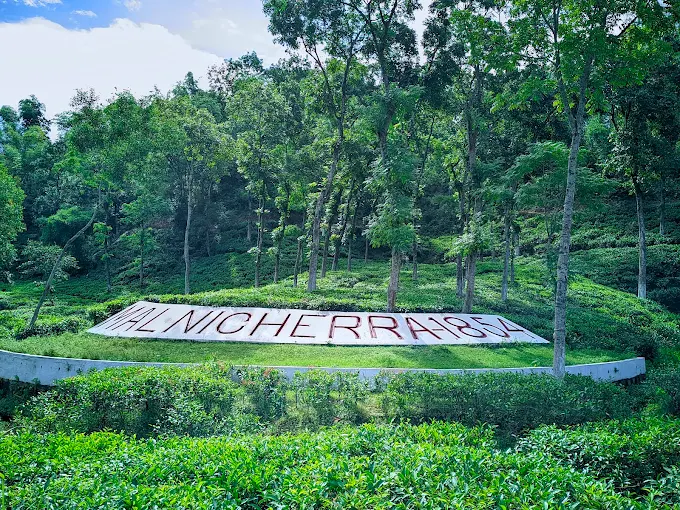
The Tea Traders Association of Bangladesh dates the establishment of Malnicherra to 1854 and commercial production to 1857. These are two different milestones, which explains why both years appear in accounts of Bangladesh’s tea history.
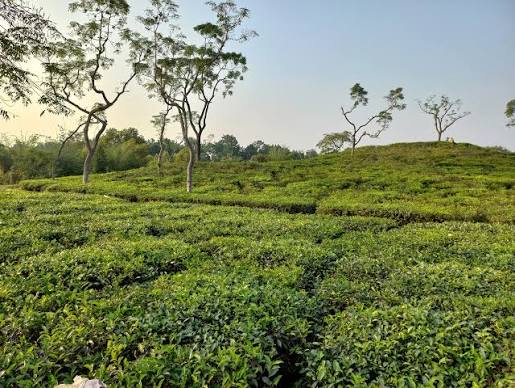
Today, a visit is an opportunity to understand the landscape and the work behind a familiar drink. It is worth looking beyond the view: an estate has production areas, access routes and private spaces, each with different rules.
From leaf to cup
The work behind black tea
Tea making involves several linked stages. This is a simple overview of black-tea production, rather than a promise of what visitors can see at a particular Sylhet estate. Equipment and processing methods vary.
Plucking
Young leaves are harvested from the bushes. Selecting suitable growth is skilled work; visitors should leave the leaves alone unless an authorised activity specifically allows picking.
Withering
The harvested leaf loses moisture and becomes softer. This prepares it for the next processing stage.
Rolling and oxidation
Rolling or other mechanical processing breaks the leaf’s structure. Oxidation changes its colour and contributes to the flavour associated with black tea.
Drying
Drying reduces the remaining moisture and helps stop oxidation. The tea can then be sorted and prepared for sale.
For a general explanation of these stages, see tea grower Tregothnan’s black-tea guide.
The people behind the scenery
Workers, families and community life
An estate is more than a place of production. For families connected to tea-garden employment, work, home life and community relationships can be closely linked. The details differ between estates, and a visitor cannot judge living conditions from a short walk or a photograph.
Women have a major role in the industry. In its June 2024 account of Bangladesh’s tea sector, the International Labour Organization reported that around half of the workers it counted were women. That is a dated national figure, not a current headcount for Sylhet.
Recognising the work and the challenges
The ILO has studied tea workers’ rights, safe working conditions and fair pay. Its 2024 discussion in Sreemangal brought workers, employers and government representatives together to address decent work, skills and economic opportunities.
These reports give important context without telling us the conditions at every individual estate. We should not assume that all workers have adequate housing, healthcare or schooling, or portray difficult living conditions as part of a picturesque tourist experience.
Tea-garden communities should also be allowed to describe their own traditions. Languages, beliefs and celebrations vary; a generic festival list cannot represent every family or estate.
Weather and the rhythm of work
Tea growth and harvesting depend on conditions in the garden. Rain, heat and changing weather can affect field work, while maintenance and processing bring other demands. A quieter-looking garden is not necessarily a garden where work has stopped.
If seeing plucking or learning about processing matters to your visit, ask the estate or an authorised guide what is possible on your dates. Avoid relying on a fixed season or daily timetable copied from an old travel article.
Be a considerate guest
How to visit a working tea garden
Check permission first
Confirm visitor access, permitted routes, any fee and whether a guide is required. Factory entry and access to residential areas are separate matters; a visible path is not permission to enter.
Ask before photographing people
Get clear consent before taking portraits. Accept a refusal, avoid interrupting work and do not enter homes or photograph children without appropriate permission.
Stay on allowed routes
Do not pick leaves, climb equipment or walk through working rows for a photograph. Keep away from machinery and follow staff instructions.
Prepare for the conditions
Wear shoes suitable for uneven ground, carry drinking water and check the forecast. Ask about steep paths and accessibility needs before travelling. Take your litter away.
Tea gardens to explore near Sylhet
Use these listings as starting points for planning. Confirm current access and arrangements before setting off.
Malnicherra Tea Estate
A useful starting point for learning about Sylhet’s tea history and estate landscape.
Lakkatura Tea Garden
Explore our listing for another tea-garden destination in the Sylhet area.
For a longer visit, plan the wider region separately rather than assuming every tea estate is close to the city. Our Sylhet tourism guide covers transport, accommodation and itinerary ideas.
Tea-garden visit questions
Can I enter any tea garden?
No. Visitor access varies. Check permission and permitted areas with the estate or an authorised guide, and follow any signs or staff instructions.
Can I see tea being processed?
Only if the estate offers and approves factory access. Working factories have safety and operational restrictions; arrange a visit in advance rather than arriving with that expectation.
Can I pick tea leaves for a photograph?
Leave the crop untouched unless you are taking part in an authorised picking activity. Ask before photographing workers and keep out of their way.
Are gardens suitable for everyone to walk around?
Routes may be uneven, steep or muddy. Ask about the specific route, transport and accessibility before making plans.
Sources and further reading
History: Tea Traders Association of Bangladesh. Processing overview: Tregothnan. Labour context: ILO working-conditions study, published 2017 and ILO tea-industry discussion, June 2024.
Reviewed 14 October 2026. Visitor permissions and local conditions should be checked for your travel dates.
Leave a Reply