
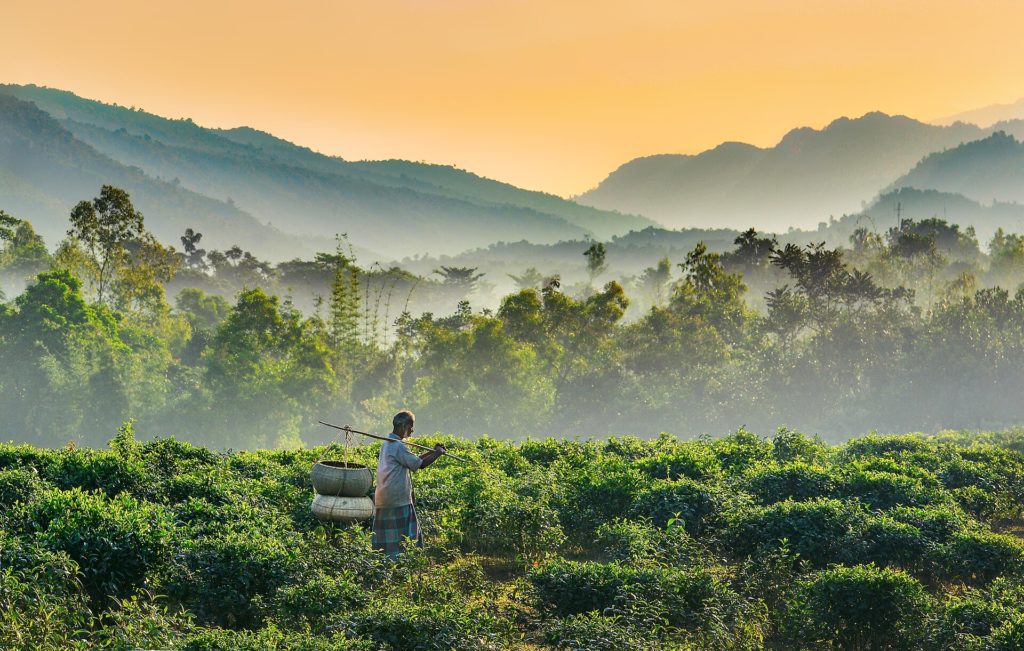
The Story of Sylhet: From Assam to East Pakistan and Bangladesh
Sylhet’s history is a remarkable journey through shifting borders, changing political landscapes, and evolving identities.
From being a key district of the Assam Province under British rule to becoming part of East Pakistan in 1947 and finally joining the independent nation of Bangladesh in 1971, the story of Sylhet is unique in South Asian history.
Takeaway: Sylhet’s path from Assam to Bangladesh reflects a powerful mix of cultural identity, political decisions, and historical turning points.
Sylhet’s Role in the Assam Province

Historic Sylhet during the late British period. Source: CJP
When Sylhet was incorporated into the Assam Province in 1874, the British had a clear administrative and economic motive.
Assam was a sparsely populated frontier province that needed revenue, educated elites, and a stable administrative base. Sylhet provided all three.
| Year | Event | Impact on Assam |
|---|---|---|
| 1874 | Sylhet joins Assam Province | Boosted revenue, population and administration |
| 1900–1940 | Tea industry expansion | Economic growth across Assam |
| 1947 | Sylhet Referendum | District split between India and Pakistan |
The region’s educated population played major roles in local governance, trade, and the administrative development of Assam.
Sylhetis held key positions in bureaucracy, business, and education, greatly influencing the province.
Takeaway: Sylhet was not just another district; it was one of Assam’s strongest administrative and economic pillars.
Cultural and Economic Importance of Sylhet
Sylhet’s influence extended far beyond economics. Its vibrant cultural scene and social harmony enriched the entire northeastern region.
Economic Contributions
- Tea estates in Sylhet helped establish India’s northeastern tea economy.
- The Surma Valley acted as a commercial link between Bengal and the hill states.
- The region supplied food, fish, and agricultural goods to neighboring areas.
Cultural Influence
- Sylheti language and literature were widely respected across Northeast India.
- Sufi shrines in Sylhet attracted visitors from Assam, Bengal, and beyond.
- Educational institutions produced many leaders in the Assamese and Bengali cultural renaissance.
Takeaway: Sylhet’s cultural richness and economic strength made it a central part of the northeast’s identity.
Political Movements and Identity in Sylhet
Sylhet’s political identity evolved through a blend of Indian nationalism, local autonomy movements, and its own cultural pride.
Communal dynamics and economic concerns intensified political debates during the 1930s and 1940s.
Many Sylhetis supported the idea of aligning with Bengal due to linguistic and cultural similarities. Others preferred remaining in Assam due to administrative stability and economic advantage.
These competing visions set the stage for the referendum of 1947.
Takeaway: Sylhet’s politics were shaped by a complex mix of regional identity, economic interest, and cultural heritage.
The 1947 Sylhet Referendum

The Sylhet Referendum was held on July 6–7, 1947. It asked a simple but profound question:
Should Sylhet remain in India (Assam) or join East Pakistan?
The results showed a majority in favor of joining Pakistan, though with variations across subdivisions.
Karimganj voted more in favor of remaining with India, which influenced the final boundary decision.
| Region | Referendum Outcome | Final Status (Post-Partition) |
|---|---|---|
| Main Sylhet | Majority for Pakistan | Joined East Pakistan |
| Karimganj | Significant votes for India | Became part of India |
Takeaway: The referendum was the decisive moment that changed Sylhet’s future forever.
How the Radcliffe Award Redefined Sylhet
The final boundary was determined by the Radcliffe Commission.
While the referendum results favored Pakistan, Radcliffe awarded the Karimganj subdivision to India based on administrative continuity and demographic considerations.
This split created sudden migration, emotional upheaval, and long-term socio-economic impacts.
Families found themselves on opposite sides of a newly created international border.
Takeaway: The Radcliffe Award permanently divided Sylhet and reshaped the region’s cultural and geopolitical map.
Sylhet in East Pakistan (1947–1971)
After joining East Pakistan, Sylhet became part of a new nation with new challenges. Language tensions, administrative neglect, and political struggles marked the early years.
Sylhet played a significant role in resisting attempts to impose Urdu as the sole national language. Many Sylhetis were active in the Bengali Language Movement, which laid the foundation for future political activism.
Takeaway: Sylhet became a strong voice in defending Bengali cultural and linguistic rights during the East Pakistan period.
From East Pakistan to Bangladesh

Sylhet was a major center of resistance during the Bangladesh Liberation War. Many battles took place across Sylhet, and its freedom fighters played critical roles in achieving victory in 1971. After independence, Sylhet experienced rapid economic growth—fueled significantly by overseas remittances from the Sylheti diaspora, especially in the United Kingdom.
 Mohammad Ataul Gani Osmani who 1st Commander-in-Chief of Bangladesh Army, was born on 1 September 1918 in Sunamganj, Sylhet (then part of Assam Province in British India). He came from a Bengali Muslim family that owned land. He was descended from Shah Nizamuddin Osmani, a companion of the 14th-century saint Shah Jalal. His family’s original home is in Dayamir Union, in Osmani Nagar Upazila of Sylhet District.
Takeaway: Sylhet was both a battlefield and a backbone of the independence movement, and later became one of Bangladesh’s economic powerhouses.
The Legacy of Sylhet’s Historic Shift
Today Sylhet stands as a unique region that has experienced multiple political identities—Assamese, Pakistani, and Bangladeshi—while maintaining its own rich culture and traditions.
Takeaway: Sylhet’s journey shows how geography may change, but cultural identity remains resilient across generations.
Frequently Asked Questions
Was Sylhet always part of Assam?
No. Sylhet was historically connected to Bengal but was placed under Assam in 1874 for administrative and economic reasons.
Why did Sylhet join East Pakistan?
A referendum in 1947 showed a majority favoring Pakistan, leading to Sylhet’s transfer except for the Karimganj subdivision.
How did Sylhet contribute to Bangladesh’s independence?
Sylhetis played major roles in the Language Movement and the 1971 Liberation War, contributing both manpower and resources.
References
- District Gazetteer of Sylhet (British India)
- The Partition of India: Policies and Perspectives
- Assam Provincial Records (1874–1947)
- Radcliffe Boundary Commission Report
- Bangladesh Liberation War Documents
- Wikipedia